


Protoss PE11-M RS485 to Ethernet 24 VDC Power Supply
Item no. PE11-M
PE11-M: Transparent RS485 to Ethernet Gateway, 9~ 48 VDC power supply
VAT excluded
Specifications
- Weight
- 2000 g
Description
The Protoss-PE11 is an RS485 to TCP/IP interface gateway.
The Protoss-PE11 integrates a TCP/IP controller, memory, a 10/100M Ethernet transceiver, RS485, and a fully developed TCP/IP network stack and FreeRTOS operating system. The Protoss-PE11 also includes an embedded web server used for configuring the device.
The Protoss-PE11, using a highly integrated hardware and software platform, has been optimized for all types of applications in industrial control, smart grid, personal medical applications, and remote control that have lower data transmission speeds and transmit or receive data on an infrequent basis.
Technical Features
- Cortex-M3 MCU with 2MB Flash and 128KB SRAM
- Uses FreeRTOS operating system
- Supports TCP/UDP/MQTT/HTTP/WebSocket Protocol
- Supports Modbus TCP to RTU, Modbus Master function
- Supports RS485 to 10M Ethernet conversion, serial speed up to 460800 bps
- Supports 10/100M Ethernet auto-negotiation
- Easy configuration via Webpage or PC IOTService tool
- Supports security protocols such as AES/DES3
- Supports Heartbeat and Register packet function
- Supports Webpage OTA wireless upgrade
- Supports industrial temperature: -40 to +85˚ C
- Multiple types of different power input:
- Protoss-PE11-M:9~ 48 VDC @ 1A
- Dimensions: 97.60 x 64.95 x 27.50 mm (L x W x H), C45 rail installation
Frequently asked questions
Related products
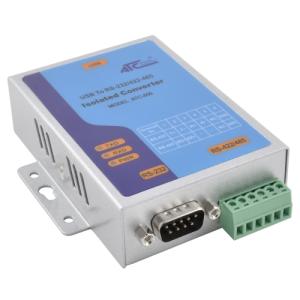
ATC-850
ATC-850 - USB-to-serial RS232 and RS485/422

DK-35A
DK-35A - DIN-rail Accessory

D540-611E00
UHF RTU RADIOMODEM with antenna

ELFIN-EW11-485-ANT
ELFIN-EW11-485-ANT RS485 to WiFi connection device with external antenna

HF2221
HF2221 Device Server - two RS232/RS485 ports, TCP/IP, WIFI
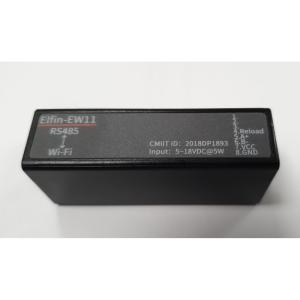
ELFIN-EW11A-485
ELFIN-EW11A-485 RS485 to WiFi Connection Device Extended Power Range
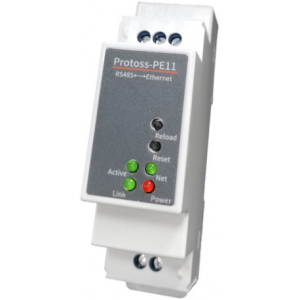
PE11-H
Protoss PE11-H from RS485 to Ethernet 220 VAC Power Supply
